Commercial Waste North Watford: Recycling & Sustainability
Welcome to our overview of Commercial Waste North Watford services focused on building an eco-friendly waste disposal area and a thriving sustainable rubbish area. This page explains targets, local infrastructure, community partnerships and the low-carbon transport choices that help businesses in and around North Watford reduce footprint while improving material recovery.Our approach to managing commercial waste in North Watford balances practical on-site separation with broader circular-economy actions. We work alongside borough-level schemes so that businesses benefit from the same high standards of reuse and recycling that residents expect from the local council’s waste separation plans. The aim is to make North Watford commercial waste collection predictable, compliant and tuned to resource recovery.
 Central to progress is a clear recycling percentage target. We have adopted an ambitious goal: a minimum 65% recycling rate for commercial streams by 2030, with interim milestones of 50% by 2026. These targets are framed to complement Hertfordshire and Watford Borough ambitions and to push for higher rates in the local eco-friendly waste disposal area.
Local transfer stations are vital to reach those goals. Collections from businesses in North Watford are routed to nearby facilities such as the Watford Transfer Station and regional consolidation points across Hertfordshire, which feed material into recycling centres and energy recovery plants. These transfer hubs reduce collection mileage and enable better segregation of cardboard, paper, glass and organics.
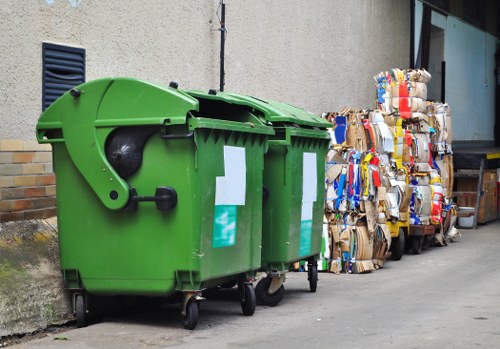
To align with boroughs' approach to waste separation, we support on-site stream separation and clearly labelled containers for food, glass, paper, mixed recycling and residual waste. Working with premises managers, we tailor container sizes and frequencies so that businesses in the sustainable rubbish area avoid contamination and maximise resource capture.
- Paper & cardboard: baled or compacted for reprocessing.
- Glass: separated to preserve colour and quality.
- Food & organics: collected for anaerobic digestion or composting.
- Plastics & metals: segregated to reduce mixed-waste leakage.
- WEEE & textiles: routed to specialist processors or charity reuse streams.
 Partnerships with charities and reuse organisations are a cornerstone of our sustainability model. Unwanted but reusable office furniture, textiles and electrical items are diverted to local charities — for example, regional outlets and charity partners that run repair and resale programmes. These relationships help create a local circular loop: items that would otherwise be disposed of become community assets, supporting social value and reducing commercial disposal tonnage.
We manage contractual frameworks so goods destined for reuse are properly documented and handled. Where donation is not feasible, items are directed to specialist recyclers to reclaim materials. Working alongside charities also provides businesses with clear audit trails for environmental reporting and compliance with waste duty of care.
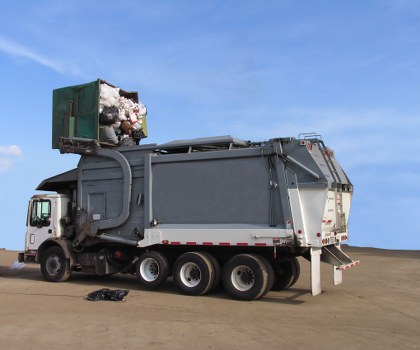
Fleet emissions are being tackled by modernising vehicle choices. Our service uses a mix of low-carbon vans including fully electric vehicles and Euro VI low-emission models for heavier loads. Vehicles are deployed with route optimisation software to minimise mileage and time on the road, lowering emissions in the urban North Watford area and cutting fuel consumption overall.
Beyond vehicles, we invest in low-impact handling equipment and encourage investments by business clients in compactors and balers that reduce the number of collections needed. This not only lowers costs but also makes the eco-friendly waste disposal area more efficient by increasing the density of recyclable loads sent to transfer stations.
Monitoring, reporting and continuous improvement
We track performance against the recycling percentage target through monthly reporting and quarterly reviews. Key performance indicators include diversion rate, contamination levels, number of items reused via charity partnerships and fleet emissions per tonne collected. These metrics inform operational tweaks and strategic investments.Training & engagement
Staff training and tenant engagement programmes are essential in creating a genuine sustainable rubbish area. We offer tailored induction sessions for site teams and produce clear signage and bin labelling so that businesses contribute correctly to the separation regime. Behavioural changes at source deliver the largest gains in recycling rates.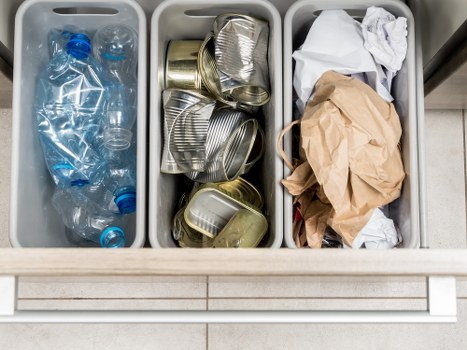 To support scalability, we promote procurement policies that prioritise recycled-content materials and reusable packaging. This demand-side action complements collection and processing, helping to close the loop for materials recovered from North Watford commercial sites. Strategic purchasing reduces the overall waste generated and increases the market for recycled goods.
Investment in advanced sorting at transfer stations and partnerships with regional reprocessors ensures higher value materials are reclaimed. Anaerobic digestion of food waste, mechanical recycling of plastics, and fibre reprocessing for paper and cardboard are part of the technical mix that turns commercial rubbish into resources rather than landfill fodder.
 In summary, managing commercial rubbish North Watford sustainably requires coherent targets, effective local transfer stations, meaningful charity partnerships and a low-emission collection fleet. By embedding these elements into everyday operations we create a resilient, high-performing eco-friendly waste disposal area that benefits businesses, communities and the environment. Together, through commitment and better systems, North Watford can meet and exceed its recycling targets while fostering a circular economy for local commercial waste.
